
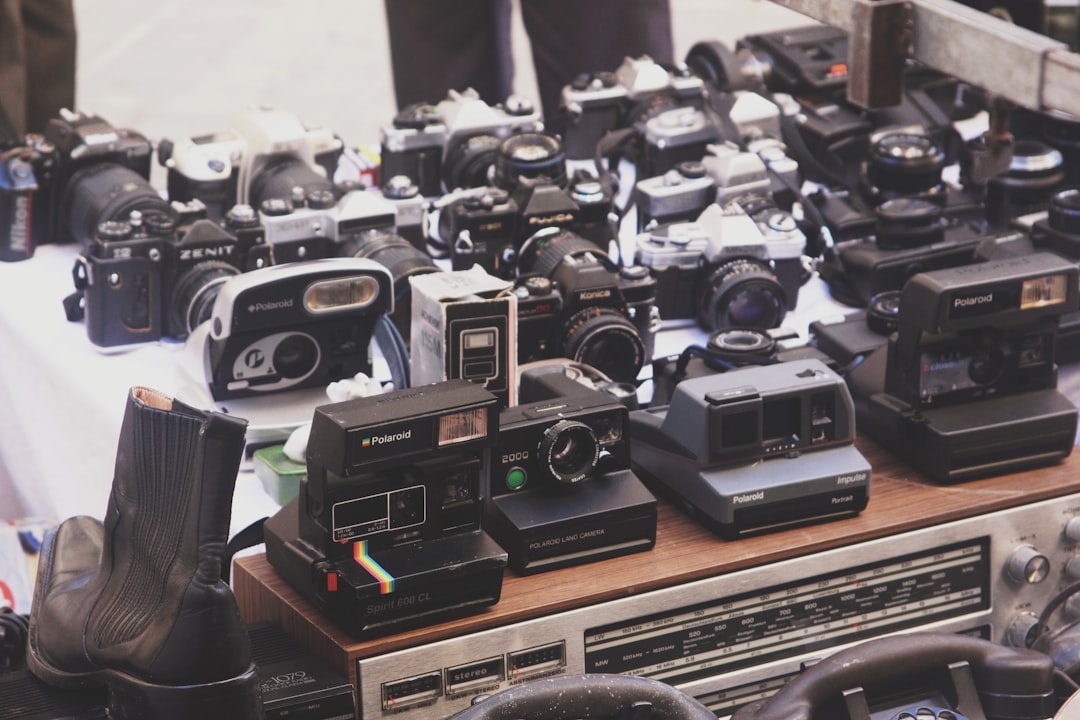
Since their invention, photocopiers have undergone a remarkable evolution that has transformed the modern office landscape. In the 1950s, early models were bulky and impractical, limiting their use to specific tasks. However, with the advent of digital technology in the 1980s, photocopiers began to become smaller and more accessible.
Businesses then began to integrate these machines into their daily processes, facilitating document reproduction and information management. Today, photocopiers no longer simply reproduce documents; they have become multifunctional centers capable of printing, scanning, faxing, and even sending emails.
This evolution has enabled businesses to optimize their workflows and improve productivity. Modern photocopiers also come with advanced features such as wireless connectivity and document management, making their use even more efficient and integrated into everyday business life. Abstract
The Evolution of Photocopiers in the Business World
- The Advantages and Disadvantages of Photocopiers in the Workplace
- Photocopiers as Symbols of Bureaucracy in Business Literature
- Photocopiers as Communication and Collaboration Tools in Business Novels
- Photocopiers as Sources of Conflict and Tension in Business Narratives
- The Advantages and Disadvantages of Photocopiers in the Workplace
Photocopiers offer many benefits to businesses. First, they allow for quick and efficient document reproduction, which is essential in an environment where time is often of the essence. Furthermore, the ability to scan documents makes it easier to archive and share them, reducing the need for physical storage.
Modern photocopiers are also designed to be energy-efficient, which can help reduce operational costs for businesses. However, using photocopiers is not without its drawbacks. One of the main issues lies in the cost of maintaining and running these machines.
Toner cartridges and paper can represent a significant expense for businesses, especially if they print in large quantities. Furthermore, over-reliance on these devices can lead to a decrease in interpersonal communication within teams, as employees may prioritize sending documents over engaging in direct discussions. Photocopiers as Symbols of Bureaucracy in Business Literature
Photocopiers
In business literature, photocopiers are often used as symbols of bureaucracy. They represent a rigid system where procedures and rules prevail over creativity and innovation.

This image highlights the frustration employees can feel with rigid hierarchies and inefficient processes. Furthermore, photocopiers can also symbolize the inefficiency of bureaucratic systems. In several stories, characters struggle with faulty machines or frequent breakdowns that slow down their work. These situations highlight the challenges modern businesses face as they attempt to navigate a complex and often outdated environment. Thus, photocopiers become a reflection of the internal struggles within organizations.
Photocopiers as Communication and Collaboration Tools in Business Novels
In many business novels, photocopiers play a crucial role as communication and collaboration tools. They facilitate the sharing of information between colleagues, thus enabling better coordination of projects. For example, a character might print an important report for a meeting, fostering constructive discussion around the ideas presented.
This dynamic highlights the importance of visual communication in the workplace. Additionally, photocopiers can also serve as an informal meeting point for employees. In some stories, characters gather around a photocopier to exchange ideas or discuss common issues.
These interactions strengthen bonds between colleagues and foster team spirit. Thus, beyond their utilitarian function, photocopiers become catalysts for collaboration and innovation within companies.
Photocopiers as Sources of Conflict and Tension in Corporate Narratives
Despite their usefulness, photocopiers can also be a source of conflict and tension in the workplace. Situations such as frequent breakdowns or a lack of paper can cause frustration among employees, especially when they are pressed for time. In some stories, these minor incidents escalate into major disputes between colleagues, illustrating how technical issues can exacerbate underlying tensions within a team.
Furthermore, the management of photocopier resources can also lead to conflict.
For example, if an employee excessively uses a machine to the detriment of others, it can create a sense of unfairness among their colleagues. These dynamics highlight how even the most mundane tools can become sources of contention in a competitive business environment.
Photocopiers as a Representation of Productivity and Work Efficiency Photocopiers
Speed, the Key to Productivity
The Downsides of Efficiency
However, this relentless quest for efficiency can also have its downsides. The pressure to produce more can lead to increased stress among employees, who feel compelled to maximize their output at all costs.
Criticism of the Modern Capitalist System
In some business narratives, this obsession with productivity is highlighted as a critique of the modern capitalist system, where humans are sometimes relegated to the background in favor of efficient machines.
Photocopiers as Setting and Context in Business Literature
In business literature, photocopiers are not only functional tools; they also serve as setting elements that help create a specific atmosphere. The presence of a photocopier in an office can evoke a professional but also sometimes oppressive atmosphere. Detailed descriptions of the machines can reinforce the idea of a rigid environment where innovation is stifled by daily routine.
Furthermore, these devices can also serve to anchor the story in a specific temporal context. For example, a story set in the 1990s might describe a photocopier with limited technology, while another set today might highlight sophisticated machines connected to the cloud. Thus, photocopiers become not only narrative props but also silent witnesses to the passage of time and technological developments. Photocopiers as a metaphor for the reproduction and dissemination of ideas in professional works
Finally, photocopiers can be seen as a powerful metaphor for the reproduction and dissemination of ideas in the professional world. By allowing ideas to be easily reproduced and shared, these machines play a key role in the creative and collaborative process within businesses. In several literary works, the act of copying a document becomes synonymous with the sharing of innovative ideas that can transform an organization.
This metaphor also highlights the importance of knowledge sharing in the workplace. Photocopiers not only enable the dissemination of information but also the emergence of new perspectives through collaboration between different stakeholders. Thus, they embody the idea that every idea can be multiplied and improved through collective effort.
In conclusion, photocopiers occupy a central place in the professional world both functionally and symbolically. They represent both efficiency and bureaucracy, while playing a crucial role in communication and collaboration within teams. Their presence in business literature highlights the complexities of the modern workplace and invites us to reflect on our relationship with the technological tools that shape our daily work.
A related article to “Photocopiers in Business Literature” is the one on
Why Choose a Professional Printing Company in Namur
. This article explores the benefits of using a professional printing company to meet your business’s printing needs. It highlights the importance of quality and reliability of printing services to ensure effective communication with your customers and business partners.
Leave a Reply